The world’s first supermarket printed by a 3D concrete printer
30 June 2026
-
-

-
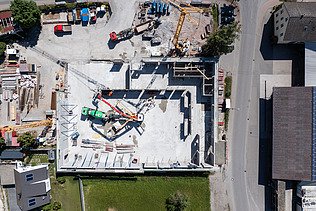
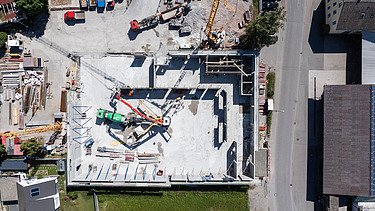
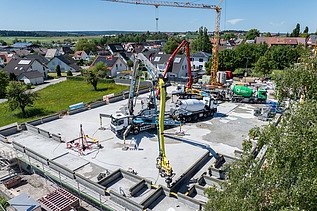
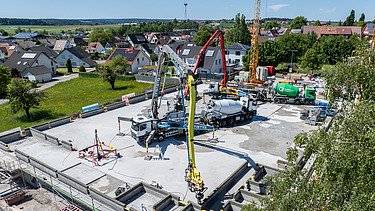
- Industrial-scale 3D printing – the world’s first 3D-printed supermarket, with a floor area of around 1,700m² and more than 1,300 m² of printed wall surface area
- Heidelberg Materials’evoZero® carbon-captured near-zero cement significantly reduces CO₂ in 3D-printed concrete produced using a truck mixer
- The shell of the building, including structural interfaces, was completed in around four weeks
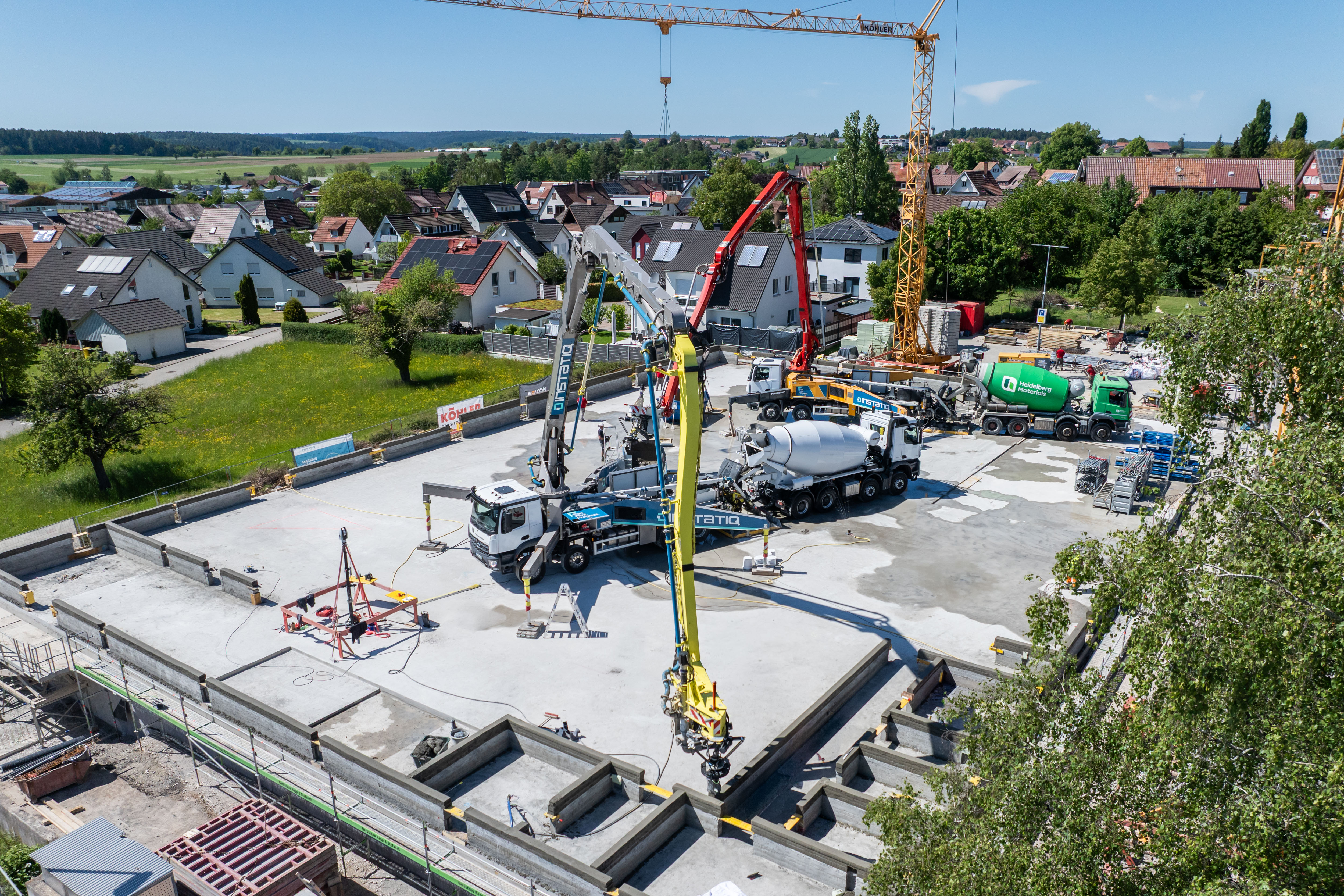
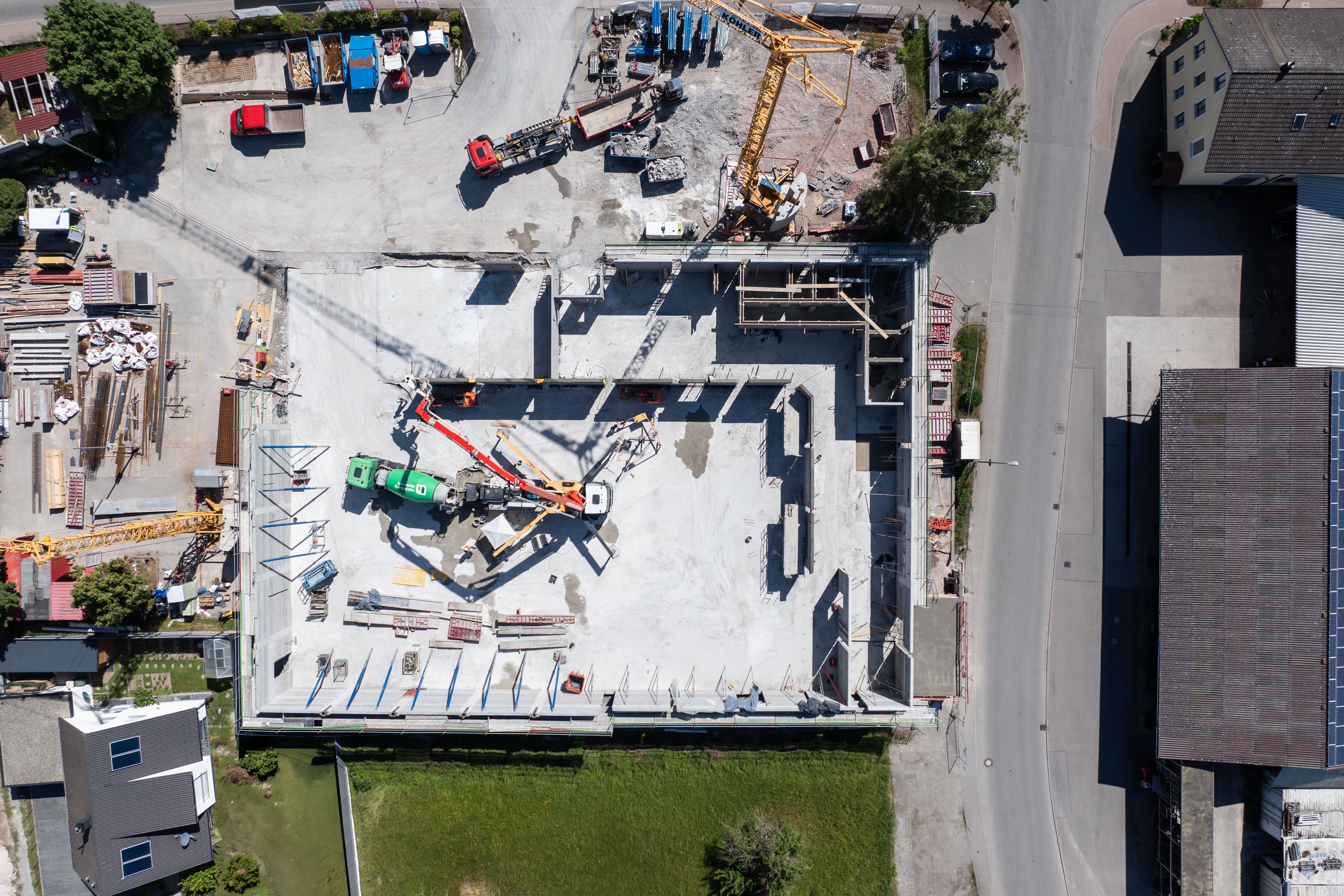
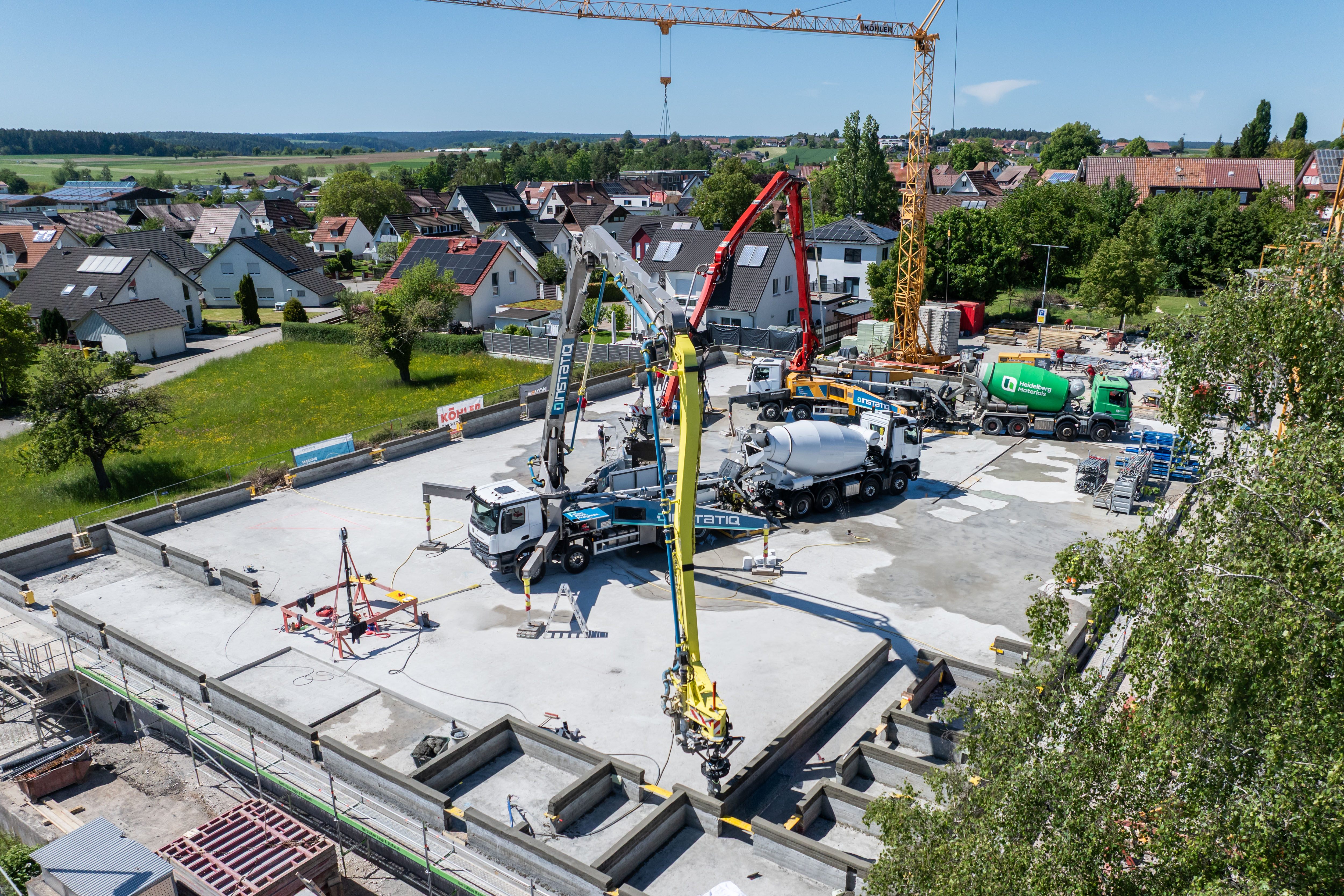
The world’s first supermarket built using 3D concrete printing is being constructed in Neubulach – and it will result ina significant reduction in CO2 Emmissions. What has so far been used primarily in pilot projects, residential buildings or smaller showcase projects is now being applied for the first time on an industrial scale to a real retail and commercial building for the food retailer Netto Marken-Discount.
The project combines two key future themes in the construction industry: automated 3D concrete printing and low-carbon building materials. For the first time, evoZero® – the world’s first cement based on carbon capture and storage (CCS) – is being used in combination with mobile 3D concrete printing. The CO₂ reduction achieved with evoZero® is made possible by the use of innovative CO₂ capture technology at Heidelberg Materials’ Brevik plant in Norway, with the captured CO₂ being permanently stored in the seabed. The project is supported by a strong network of partners: INSTATIQ is providing the 3D printing technology, NELCON (a joint venture between ZÜBLIN and INSTATIQ) is responsible for on-site execution, and Heidelberg Materials is supplying the specially developed 3D-printed concrete containing the near-zero cement evoZero®. The client is Sehne Bakery, with Netto Marken-Discount as the future tenant. The structural works contractor Köhler, the planning firm S&L and the structural engineering firm Stetter-Maier-Schmid Ingenieure are supporting the project’s implementation.
Andreas Lutz of Sehne Backwaren KG: “As the client, we are delighted to be putting an innovative construction method into practice with this project. We are thus investing not only in a new site, but also in sustainable construction processes.”
1,300m² of wall area – 292m³ of prestressed concrete – 4 weeks’
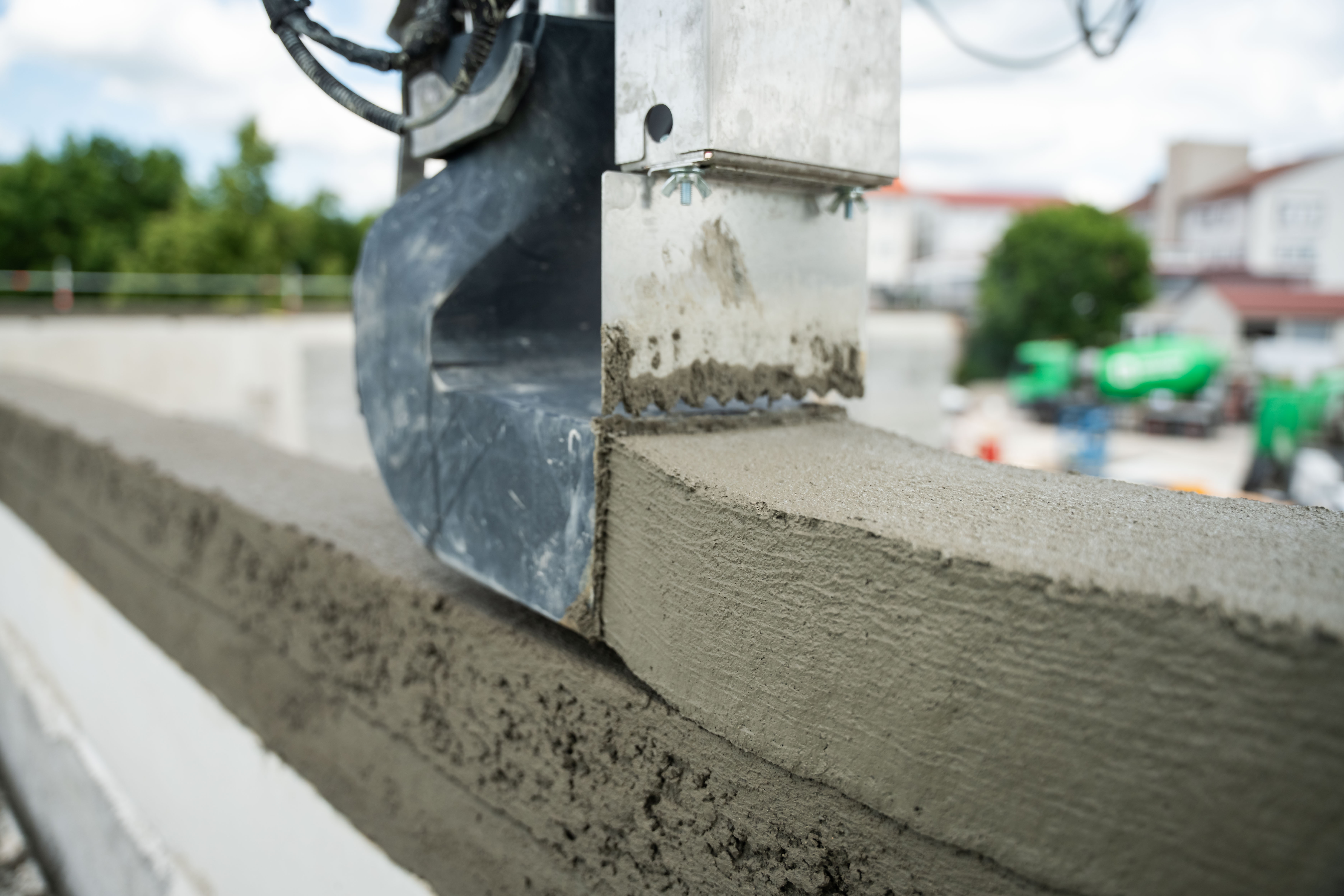
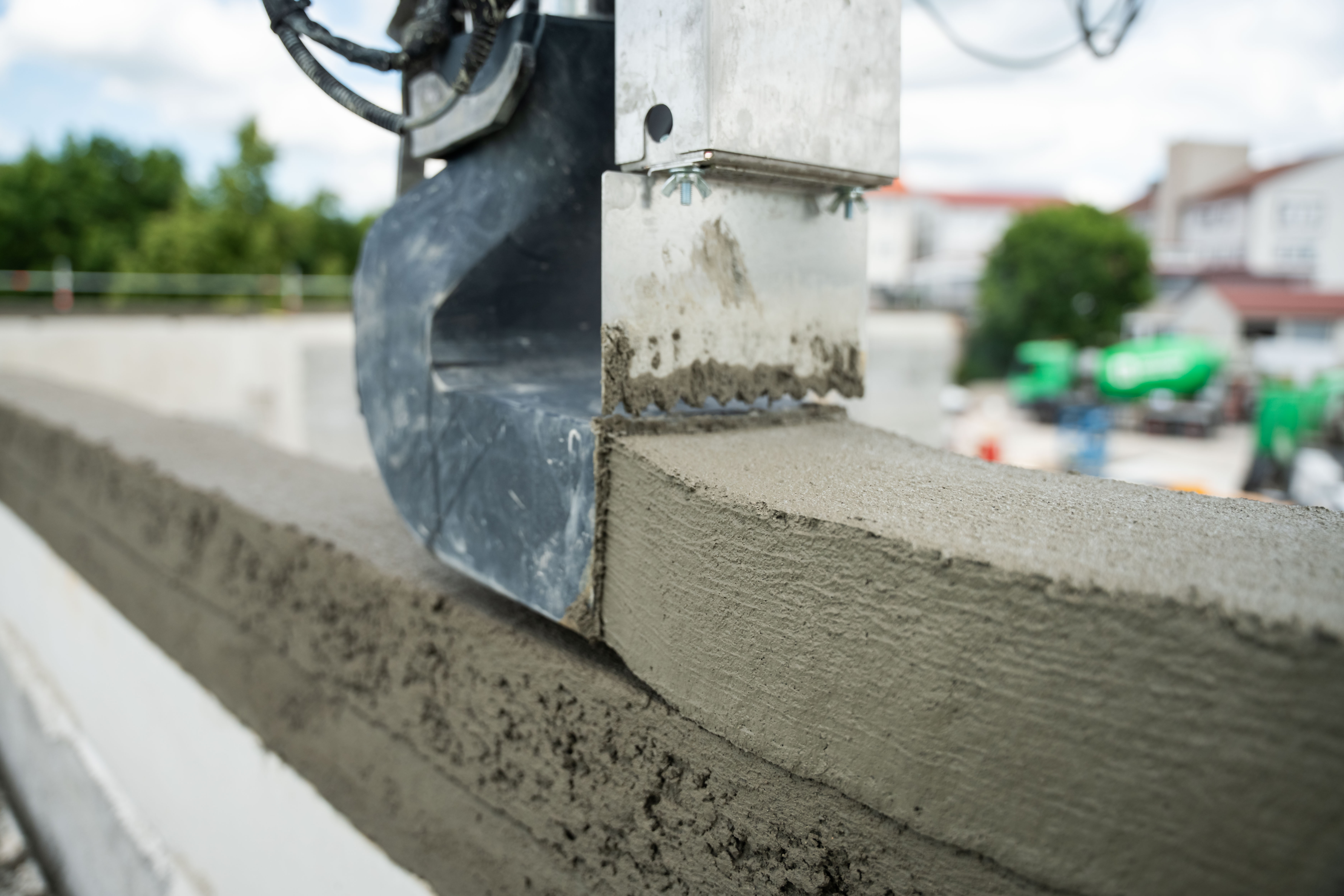
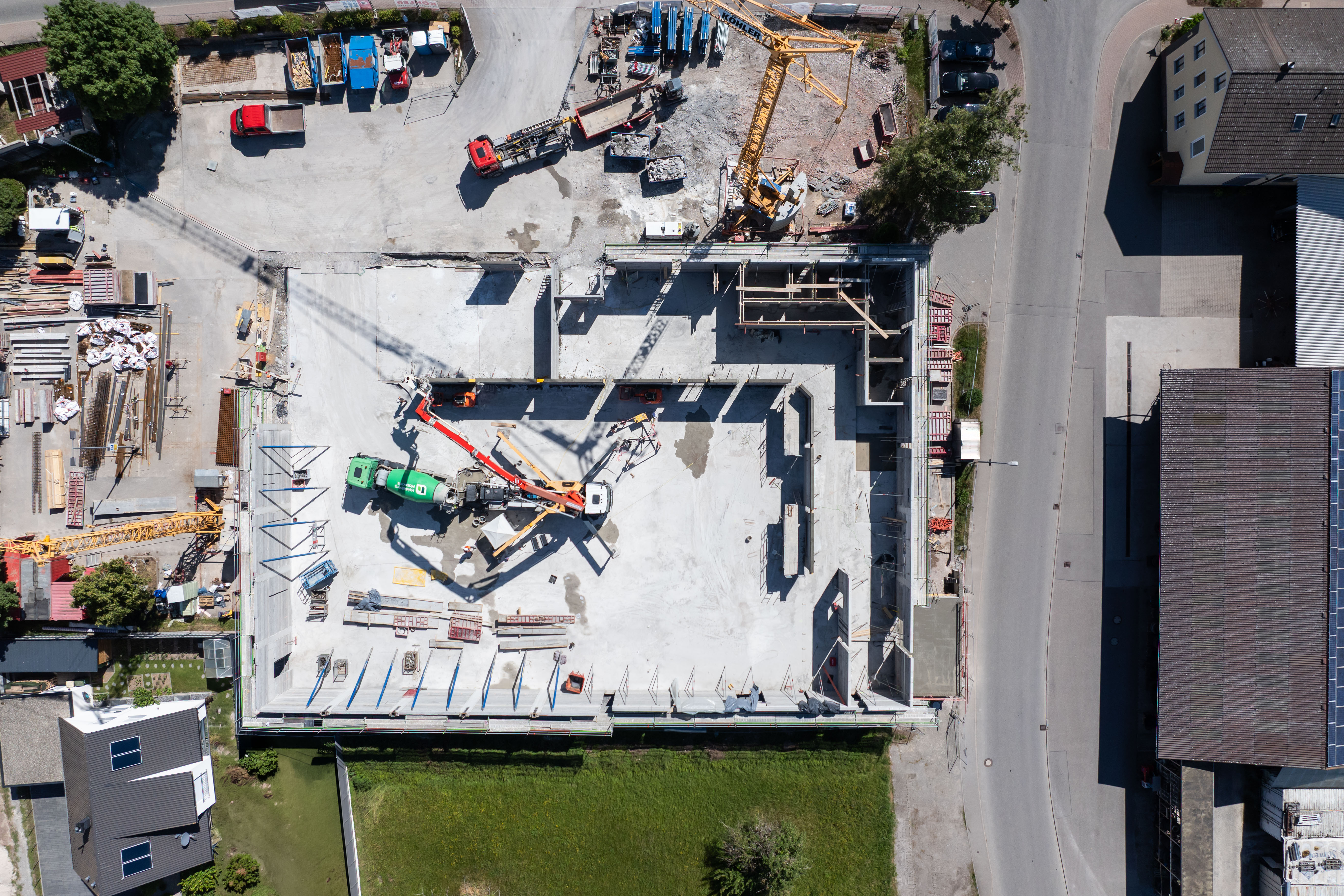
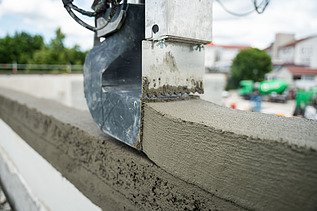
With more than 1,300 m² of printed wall surface, around 292 m³ of printed concrete and wall heights of up to seven metres, the project is currently the world’s largest completed 3D-printed building. The wall surfaces are produced almost entirely using 3D printing with the mobile INSTATIQ P1 (“Progress One”). For the first time, two mobile INSTATIQ P1 3D concrete printers working in parallel were deployed during individual construction phases. A key advantage of the system is that the robots can be moved and repositioned section by section on the construction site. This means that even large-scale buildings can be printed step by step directly on site using one or more machines. The structure is supplemented by conventional components such as columns and ring beams. The printer’s ability to directly translate digital design data into physical structures within a matter of weeks highlights the potential for faster construction processes and integration into real-world workflows. “With the first 3D-printed supermarket, we are demonstrating that our technology has arrived in the world of commercial construction. The project establishes 3D printing on an industrial scale as an economically viable construction process under real-world site conditions,” says Markus Schilling of INSTATIQ.
On site, NELCON combines digital construction preparation, machine operation and site coordination into a seamless process. Chris Brandstätt, Technical Director at NELCON, explains: “For us, this project is an important step towards integrating 3D concrete printing into larger construction projects. The focus was particularly on integrating it with traditional structural work processes.” And Friedemann Waidelich, Managing Director at Köhler Bauunternehmung Wildberg, adds: “The combination of 3D printing and conventional structural work requires close coordination between all trades. In Neubulach, we are demonstrating how both approaches can be combined in a practical and efficient manner.”
Significant CO₂ reduction through the use of the near-zero cement evo Zero®
A specially developed ready-mixed concrete from Heidelberg Materials, optimised for mobile 3D printing, was used as the 3D-printed concrete. It is characterised by high pumpability, dimensional stability and rapid strength development – crucial properties for the automated construction process.
The additional use of evoZero, the world’s first near-zero cement based onCO₂ capture and storage, reduces the carbon footprint directly during the manufacturing process. What is particularly exciting is the combination with 3D-printed concrete from the truck mixer, as evoZero enables significant CO₂ savings without the need to adjust the mix design or production process. This is a decisive advantage, particularly for the technically demanding 3D-printed concrete. “With this project, we are actively shaping the future of construction, because it brings together two forward-looking approaches – innovative materials and new construction methods – and demonstrates that they work under real-world conditions,” summarises Matthias Fischer of Heidelberg Materials.
3D concrete printing has arrived in retail construction
Supermarkets and similar building types place high demands on construction time, process reliability and cost-effectiveness. The project in Neubulach demonstrates that 3D concrete printing is suitable for standardised buildings with large wall surfaces and clearly structured workflows – whilst also being capable of being integrated into real-world construction processes.
“With our branch in Neubulach, Netto Marken-Discount is sending a strong signal about the future of retail construction: the use of 3D printing and low-carbon concrete demonstrates how innovative technologies can already be utilised efficiently and more sustainably in branch construction today. As a food retailer, we are systematically developing our branch network – with the aim of conserving resources, speeding up construction processes and, at the same time, ensuring a high-performing local supply for our customers at affordable prices,” says Christina Stylianou, Head of Corporate Communications at Netto Marken-Discount.
With the 3D-printed Netto store site, the project partners are jointly setting an example for automation, material innovation and collaborative implementation in the construction industry.
Project profile
Project: Supermarket built using 3D concrete printing, Neubulach
Client: Sehne Backwaren KG
Future tenant: Netto Marken-Discount Stiftung & Co. KG
Technology provider: INSTATIQ GmbH 3D wall construction: NELCON GmbH & Co. KG
Building materials supplier: Heidelberg Materials
Building materials: 3D-printed concrete with carbon-captured near-zero cement evoZero®
Structural works contractor: Köhler Bauunternehmung GmbH Wildberg
Designers: S&L Planungswerkstatt Nagold/Tübingen GmbH
Structural engineering: Stetter-Maier-Schmid Ingenieure, Ingenieurgesellschaft für Tragwerksplanung mbH
Printed wall area: > 1,300 m²
Printed volume: approx. 292 m³
Wall height: up to approx. 7 m
Completion: 2026
About INSTATIQ
INSTATIQ is a technology company specialising in mobile 3D concrete printing, based in Stuttgart. The company combines mechanical engineering, robotics, software, materials qualification and construction process development to put innovative, sustainable and cost-effective construction methods into practice. The INSTATIQ P1 mobile 3D concrete printer enables fully automated 3D concrete printing directly on the building site.
About NELCON
NELCON specialises in the practical implementation of 3D concrete printing projects and combines digital construction planning, site coordination and the construction of printed concrete walls. The company utilises mobile 3D concrete printing technology in real-world construction projects and, together with partners, develops repeatable processes for residential and commercial construction.
About Heidelberg Materials in Germany
Heidelberg Materials is one of the world’s largest building materials companies. In Germany, the company operates at numerous sites with around 4,000 employees and holds leading positions in cement, ready-mixed concrete and mineral building materials. As a pioneer on the path to CO₂ neutrality and a circular economy in the building materials industry, Heidelberg Materials develops more sustainable building materials and solutions for the future.
About Netto Marken-Discount
With over 4,430 branches, more than 89,000 employees, 21.5 million customers per week and a turnover of 17.9 billion
euros, Netto Marken-Discount is one of the leading companies in the food retail sector. With around 5,000 products and a focus on fresh produce, Netto offers the widest selection of food in the discount sector. Netto is a PAYBACK partner: points can be collected in all Netto branches, in the Netto online shop and on netto-reisen.de. Taking responsibility is part of Netto’s corporate culture – the retailer focuses on four key areas: community and social engagement, fair cooperation, the careful use of resources, and aligning its procurement strategy with sustainability considerations. Netto is a partner of WWF Germany: alongside expanding and promoting a more sustainable range of own-brand products, Netto is also working to further reduce its own environmental footprint by focusing on the key areas of climate protection, biodiversity, freshwater and resources. With over 5,710 apprentices, the company is also one of the leading training providers in the German retail sector and gives priority to filling management positions with committed talent from within its own ranks.
About Sehne Backwaren KG
SehneBackwaren KG is a long-established, family-run business based in Ehningen (Baden-Württemberg). Since 1957, the company has stood for artisanal baking, high product quality and continuous development. With a wide range of baked goods and numerous specialist shops in the region, Sehne combines traditional baking craftsmanship with modern concepts and a clear focus on freshness, enjoyment and customer focus.
About Köhler Bauunternehmung GmbH
Köhler Bauunternehmung GmbH is a family-run, medium-sized company founded in 1962, which currently employs over 90 people. The company carries out construction projects ranging from turnkey detached houses to large-scale municipal or commercial projects in the Stuttgart region.
The project combines two key future themes in the construction industry: automated 3D concrete printing and low-carbon building materials. For the first time, evoZero® – the world’s first cement based on carbon capture and storage (CCS) – is being used in combination with mobile 3D concrete printing. The CO₂ reduction achieved with evoZero® is made possible by the use of innovative CO₂ capture technology at Heidelberg Materials’ Brevik plant in Norway, with the captured CO₂ being permanently stored in the seabed. The project is supported by a strong network of partners: INSTATIQ is providing the 3D printing technology, NELCON (a joint venture between ZÜBLIN and INSTATIQ) is responsible for on-site execution, and Heidelberg Materials is supplying the specially developed 3D-printed concrete containing the near-zero cement evoZero®. The client is Sehne Bakery, with Netto Marken-Discount as the future tenant. The structural works contractor Köhler, the planning firm S&L and the structural engineering firm Stetter-Maier-Schmid Ingenieure are supporting the project’s implementation.
Andreas Lutz of Sehne Backwaren KG: “As the client, we are delighted to be putting an innovative construction method into practice with this project. We are thus investing not only in a new site, but also in sustainable construction processes.”
1,300m² of wall area – 292m³ of prestressed concrete – 4 weeks’
With more than 1,300 m² of printed wall surface, around 292 m³ of printed concrete and wall heights of up to seven metres, the project is currently the world’s largest completed 3D-printed building. The wall surfaces are produced almost entirely using 3D printing with the mobile INSTATIQ P1 (“Progress One”). For the first time, two mobile INSTATIQ P1 3D concrete printers working in parallel were deployed during individual construction phases. A key advantage of the system is that the robots can be moved and repositioned section by section on the construction site. This means that even large-scale buildings can be printed step by step directly on site using one or more machines. The structure is supplemented by conventional components such as columns and ring beams. The printer’s ability to directly translate digital design data into physical structures within a matter of weeks highlights the potential for faster construction processes and integration into real-world workflows. “With the first 3D-printed supermarket, we are demonstrating that our technology has arrived in the world of commercial construction. The project establishes 3D printing on an industrial scale as an economically viable construction process under real-world site conditions,” says Markus Schilling of INSTATIQ.
On site, NELCON combines digital construction preparation, machine operation and site coordination into a seamless process. Chris Brandstätt, Technical Director at NELCON, explains: “For us, this project is an important step towards integrating 3D concrete printing into larger construction projects. The focus was particularly on integrating it with traditional structural work processes.” And Friedemann Waidelich, Managing Director at Köhler Bauunternehmung Wildberg, adds: “The combination of 3D printing and conventional structural work requires close coordination between all trades. In Neubulach, we are demonstrating how both approaches can be combined in a practical and efficient manner.”
Significant CO₂ reduction through the use of the near-zero cement evo Zero®
A specially developed ready-mixed concrete from Heidelberg Materials, optimised for mobile 3D printing, was used as the 3D-printed concrete. It is characterised by high pumpability, dimensional stability and rapid strength development – crucial properties for the automated construction process.
The additional use of evoZero, the world’s first near-zero cement based onCO₂ capture and storage, reduces the carbon footprint directly during the manufacturing process. What is particularly exciting is the combination with 3D-printed concrete from the truck mixer, as evoZero enables significant CO₂ savings without the need to adjust the mix design or production process. This is a decisive advantage, particularly for the technically demanding 3D-printed concrete. “With this project, we are actively shaping the future of construction, because it brings together two forward-looking approaches – innovative materials and new construction methods – and demonstrates that they work under real-world conditions,” summarises Matthias Fischer of Heidelberg Materials.
3D concrete printing has arrived in retail construction
Supermarkets and similar building types place high demands on construction time, process reliability and cost-effectiveness. The project in Neubulach demonstrates that 3D concrete printing is suitable for standardised buildings with large wall surfaces and clearly structured workflows – whilst also being capable of being integrated into real-world construction processes.
“With our branch in Neubulach, Netto Marken-Discount is sending a strong signal about the future of retail construction: the use of 3D printing and low-carbon concrete demonstrates how innovative technologies can already be utilised efficiently and more sustainably in branch construction today. As a food retailer, we are systematically developing our branch network – with the aim of conserving resources, speeding up construction processes and, at the same time, ensuring a high-performing local supply for our customers at affordable prices,” says Christina Stylianou, Head of Corporate Communications at Netto Marken-Discount.
With the 3D-printed Netto store site, the project partners are jointly setting an example for automation, material innovation and collaborative implementation in the construction industry.
Project profile
Project: Supermarket built using 3D concrete printing, Neubulach
Client: Sehne Backwaren KG
Future tenant: Netto Marken-Discount Stiftung & Co. KG
Technology provider: INSTATIQ GmbH 3D wall construction: NELCON GmbH & Co. KG
Building materials supplier: Heidelberg Materials
Building materials: 3D-printed concrete with carbon-captured near-zero cement evoZero®
Structural works contractor: Köhler Bauunternehmung GmbH Wildberg
Designers: S&L Planungswerkstatt Nagold/Tübingen GmbH
Structural engineering: Stetter-Maier-Schmid Ingenieure, Ingenieurgesellschaft für Tragwerksplanung mbH
Printed wall area: > 1,300 m²
Printed volume: approx. 292 m³
Wall height: up to approx. 7 m
Completion: 2026
About INSTATIQ
INSTATIQ is a technology company specialising in mobile 3D concrete printing, based in Stuttgart. The company combines mechanical engineering, robotics, software, materials qualification and construction process development to put innovative, sustainable and cost-effective construction methods into practice. The INSTATIQ P1 mobile 3D concrete printer enables fully automated 3D concrete printing directly on the building site.
About NELCON
NELCON specialises in the practical implementation of 3D concrete printing projects and combines digital construction planning, site coordination and the construction of printed concrete walls. The company utilises mobile 3D concrete printing technology in real-world construction projects and, together with partners, develops repeatable processes for residential and commercial construction.
About Heidelberg Materials in Germany
Heidelberg Materials is one of the world’s largest building materials companies. In Germany, the company operates at numerous sites with around 4,000 employees and holds leading positions in cement, ready-mixed concrete and mineral building materials. As a pioneer on the path to CO₂ neutrality and a circular economy in the building materials industry, Heidelberg Materials develops more sustainable building materials and solutions for the future.
About Netto Marken-Discount
With over 4,430 branches, more than 89,000 employees, 21.5 million customers per week and a turnover of 17.9 billion
euros, Netto Marken-Discount is one of the leading companies in the food retail sector. With around 5,000 products and a focus on fresh produce, Netto offers the widest selection of food in the discount sector. Netto is a PAYBACK partner: points can be collected in all Netto branches, in the Netto online shop and on netto-reisen.de. Taking responsibility is part of Netto’s corporate culture – the retailer focuses on four key areas: community and social engagement, fair cooperation, the careful use of resources, and aligning its procurement strategy with sustainability considerations. Netto is a partner of WWF Germany: alongside expanding and promoting a more sustainable range of own-brand products, Netto is also working to further reduce its own environmental footprint by focusing on the key areas of climate protection, biodiversity, freshwater and resources. With over 5,710 apprentices, the company is also one of the leading training providers in the German retail sector and gives priority to filling management positions with committed talent from within its own ranks.
About Sehne Backwaren KG
SehneBackwaren KG is a long-established, family-run business based in Ehningen (Baden-Württemberg). Since 1957, the company has stood for artisanal baking, high product quality and continuous development. With a wide range of baked goods and numerous specialist shops in the region, Sehne combines traditional baking craftsmanship with modern concepts and a clear focus on freshness, enjoyment and customer focus.
About Köhler Bauunternehmung GmbH
Köhler Bauunternehmung GmbH is a family-run, medium-sized company founded in 1962, which currently employs over 90 people. The company carries out construction projects ranging from turnkey detached houses to large-scale municipal or commercial projects in the Stuttgart region.