New build of Erlangen lock: STRABAG wins major contract worth € 380 million
22 May 2026
-
-
- Lock replacement supports future viability of Main–Danube Canal
- Work to be carried out while shipping operations continue
- Contract value of € 380 million (STRABAG share: 90%)
STRABAG, together with Group company ZÜBLIN, has once again secured a major contract in the waterways sector. On behalf of the Waterways Construction Office Aschaffenburg (Wasserstraßen-Neubauamt Aschaffenburg – WNA), ZÜBLIN, in a consortium with Bauer Spezialtiefbau GmbH, will construct the replacement of the Erlangen lock on the Main–Danube Canal. The contract value amounts to approximately € 380 million.
This is the consortium’s second lock project in the region: work on the replacement of the Kriegenbrunn lock just a few kilometres away has been ongoing since 2024.
Extensive construction project for the future viability of the waterway
Waterways are of central importance for Germany and for Europe, as they enable the efficient transport of large volumes of goods. They strengthen the economy by supporting secure supply chains, connecting key industrial and commercial regions, and thereby enhancing Europe’s competitiveness. At the same time, investment needs for upgrading waterways remain high. The works on the Kriegenbrunn and Erlangen locks along the Main–Danube Canal set an important milestone for the future viability of the waterway.
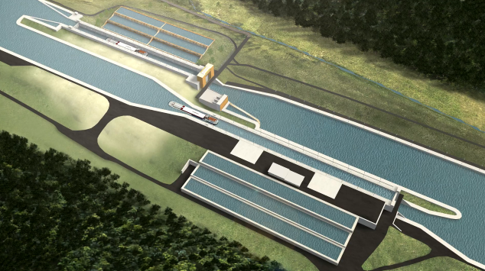
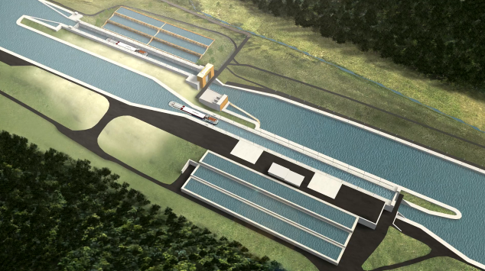
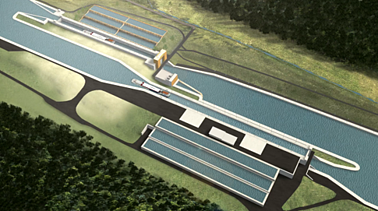
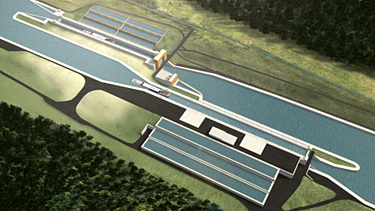
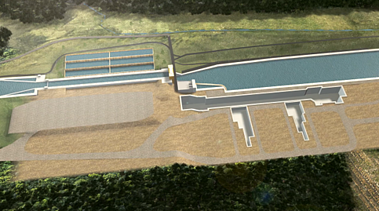
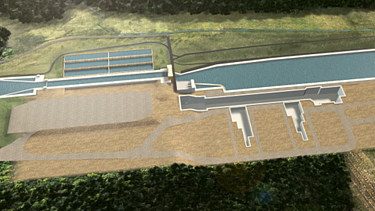
The existing Erlangen lock opened for traffic in the early 1970s. Given its structural condition, a refurbishment is not technically feasible, making a replacement new build necessary. The new structure will be built around 300 metres north of the existing lock using solid concrete construction methods. Particular emphasis is being placed on minimising the number of joints in the structure in order to increase the lock’s service life. The new lock chamber will be built with a width of 12.50 metres – an increase of half a metre – and a length of 190 metres.
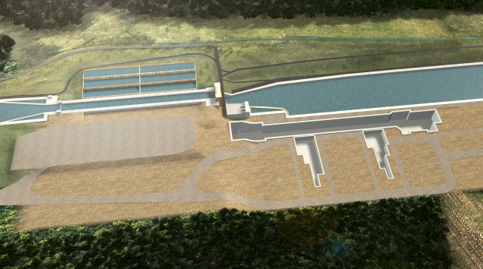
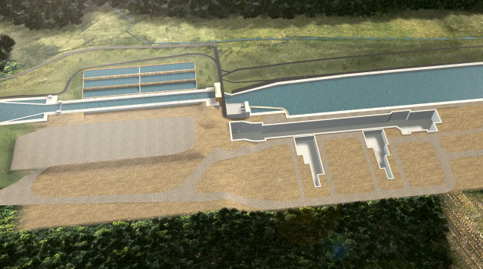
The project comprises the construction of an entire lock complex, consisting of an approach structure, upper head, lock chamber, outlet structure, lateral water-saving basins and a bypass channel for water management of the Main–Danube Canal. The bypass channel will allow water to be routed in parallel past the lock to help manage the water in the canal. The ecological design of the water-saving basins will further ensure that around 60% of water is saved during each locking operation.
The Main–Danube Canal will remain fully operational throughout the construction period, which extends until 2033. The existing facility will only be closed once the new lock has been completed to ensure uninterrupted operation of this important inland waterway transport connection.